Preparing for Cataract Surgery: A Patient's Checklist
- By Centre For Sight
- 6 minutes
Table of Contents
- Understanding Cataract Surgery: What You Need to Know
- When Should You Consider Cataract Surgery?
- Things to Know Before Your Cataract Eye Operation
- Pre-Surgery Medical Evaluations and Tests
- Medications and Dietary Considerations Before & After the Surgery
- Day of Surgery: What to Expect and How to Prepare
- Immediate Post-Op Care: What to Expect
- Long-Term Care for Lasting Results
- Conclusion
- FAQs
Understanding Cataract Surgery: What You Need to Know
Cataract surgery is the most frequently performed eye surgery in the world. The procedure removes the cloudy, hardened natural lens from your eye and replaces it with a clear artificial intraocular lens (IOL). Phacoemulsification (ultrasound energy to break up the lens) is the standard technique, renowned for its small incision, fast healing, and minimal discomfort. The procedure typically takes less than 20 minutes and is done on an outpatient basis, allowing you to return home the same day.Key Points for Patients:
- Expect very little or no pain thanks to modern numbing eye drops for cataracts surgery.
- There's a range of IOL choices?monofocal, multifocal, toric (for astigmatism), extended depth of focus?so discuss your activities and vision goals with your doctor.
- Most people notice vision improvement within 24?48 hours after surgery, but full recovery can take a few weeks.
When Should You Consider Cataract Surgery?
Cataracts are not an urgent emergency but a progressive change; your doctor will recommend surgery when vision loss affects your quality of life.Signs You Need Cataract Surgery:
- Struggling to read the newspaper or street signs, even with your glasses.
- Glare and halos making night driving dangerous.
- Difficulty watching television or recognizing faces.
- Being unable to perform tasks at work, cook, or do hobbies independently.
Things to Know Before Your Cataract Eye Operation
Your health and personal situation matter. Prepare yourself before the cataract surgery with questions like:- What other medical conditions do I have (e.g., diabetes, high blood pressure, bleeding disorders) that could affect surgery or recovery?
- Can my regular medications be continued, or will some need to be stopped (e.g., blood thinners)?
- Who will drive me to and from the surgery center?
- Do I have anyone who can help at home for a night or two?
- Is my home safe, well-lit, and free of tripping hazards?
- Arrange leave from work and notify caregivers.
- Prepare easy-to-cook meals in advance.
- Buy sunglasses for post-op light sensitivity (your doctor may give you special ones).
Pre-Surgery Medical Evaluations and Tests
A detailed pre-op assessment ensures a safe procedure and optimal IOL selection.Tests and Evaluations:
Comprehensive Eye Exam: To assess overall eye health and measure the impact of cataracts on vision. Biometry/Ocular Ultrasound: Measures the size, shape, and curvature of your eye for custom lens selection. Keratometry & Topography: Assess corneal shape; important for astigmatism correction. Medical Clearance: Blood pressure, heart evaluation, blood sugar check, and sometimes an electrocardiogram (ECG), especially for older adults. Share your full medication and supplement list, including herbal products, as some can affect bleeding or interact with anesthesia. Medicines for prostatic hypertrophy (BHP) may affect your eye muscles, and even if you took these a few months/years ago, update your doctor about it. Don't forget to mention your drug allergies.Medications and Dietary Considerations Before & After the Surgery
Medications:
- You might need to pause blood thinners (e.g., warfarin, aspirin, clopidogrel) beforehand?always under your doctor's guidance.
- Use antibiotic and anti-inflammatory eye drops before and after surgery as directed.
- Continue essential medicines for chronic conditions unless told otherwise.
Diet and Lifestyle:
- Fasting instructions (typically no food/drink for 6-8 hours before surgery) will be provided.
- Stay hydrated in the days leading up to surgery.
- After surgery, maintain a well-balanced, vitamin-rich diet (vitamins A, C, and E; lutein; omega-3 fatty acids) to support eye healing.
Day of Surgery: What to Expect and How to Prepare
- Wear loose, comfortable clothing; avoid makeup, face lotion, perfume, or jewelry.
- Bring your ID, insurance information, and a current medication list.
- Arrive early for admission, pre-surgical eye cleaning, and administration of numbing drops.
- You will meet the surgeon and team, and have time to ask last-minute questions.
- Most patients receive mild sedatives to help them relax, but you'll be awake for the surgery.
During the Surgery:
- The procedure is painless?you may see light and slight movement, but no discomfort.
- After surgery, you'll rest in recovery for a short time before heading home.
- Cataract Surgery Before and After: Realistic Expectations
- Modern surgery provides dramatic vision improvement for most but doesn't guarantee ?perfect? sight without glasses.
What to Know:
- Final visual results may take a few weeks to stabilize.
- Some people still need glasses for reading or certain tasks, depending on their IOL style.
- Colors will appear brighter, and contrast sharper
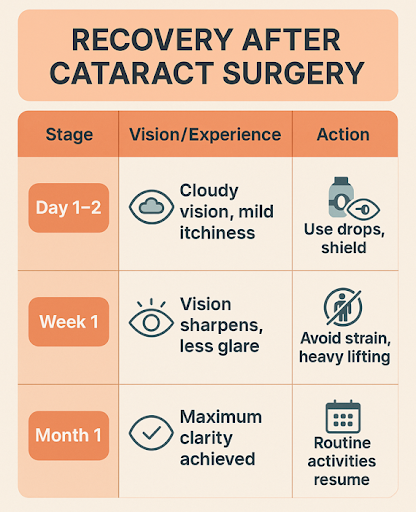
Expected Recovery Timeline After Cataract Surgery
Follow the below-given post-cataract surgery instructions to easily understand your recovery time and precautions to take for smooth recovery.?
Immediate Post-Op Care: What to Expect
- You'll leave with an eye shield and detailed post-op instructions.
- Use all prescribed drops to control inflammation and prevent infection.
- Avoid bending over, lifting anything heavy, or rubbing the operated eye.
- Keep water, soap, or shampoo out of the eye for at least one week.
Key Tips:
- Sleep on your back or non-operated side.
- Wear sunglasses outdoors to protect from bright light and dust.
- Clean your hands before touching your face or applying drops.
Potential Risks and Complications
While cataract surgery is extremely safe, being aware of uncommon complications can help you identify warning signs early.- Infection (redness, pain, decreased vision)
- Swelling of the retina (macular edema)
- Dislocated lens implant
- Persistent floaters or flashes of light
- Secondary cataract (posterior capsule opacification)
Long-Term Care for Lasting Results
Good eyesight for years to come depends on ongoing eye care.- Schedule all follow-up visits for pressure checks and healing assessment.
- Use sunglasses with UV protection long-term to prevent future eye disease.
- Watch out for glare or faded vision months/years later?a sign of secondary cataract, easily treated with a laser.
Lifestyle Tips:
- Keep chronic conditions (diabetes, blood pressure) under control.
- Avoid smoking?a major risk for future eye problems.
- Know your family's eye health history and get comprehensive eye exams as you age.
Conclusion
Cataract surgery is a partnership?your preparation, understanding, and cooperation make the journey smoother and the results brighter. With this checklist, you are ready to take each step confidently, from planning and surgery to recovery and ongoing eye health. Always stay connected with your care team, ask questions, and look toward the future with the excitement of living life in full color and clarity once more.




Could not find what you are looking for?


