Contoura Vision After Previous LASIK: Is It Possible?
- By Centre For Sight
- 5 minutes
Table of Contents
- Understanding Contoura Vision Technology
- Why Consider Contoura After LASIK?
- Is Contoura Vision Safe After a Prior LASIK Procedure?
- When Is LASIK Enhancement with Contoura Recommended?
- Risks and Considerations
- The Procedure and Recovery
- Conclusion
- Frequently Asked Questions
Understanding Contoura Vision Technology
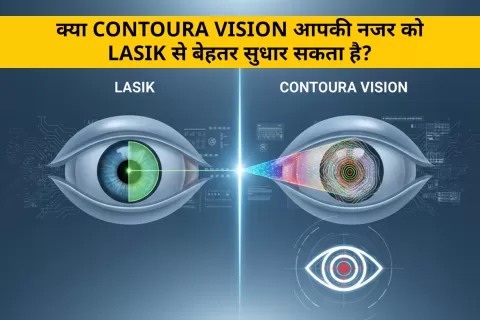
Contoura Vision is a type of customized LASIK. It uses detailed topographic maps to guide the laser. Unlike standard LASIK, which basically corrects power based on your glasses prescription, Contoura maps up to 22,000 points on the cornea to detect subtle irregularities. This topography-guided way means the laser does not just fix the refractive error, it also smoothens tiny corneal imperfections that could otherwise scatter light. This often results in sharper contrast, fewer issues with night driving, and an overall more natural visual experience. It also minimizes chances of minor distortions that some patients report after traditional procedures, making it quite appealing to those seeking the best possible clarity.Why Consider Contoura After LASIK?
So why would someone think about Contoura after LASIK? In most cases, standard LASIK works very well. But some patients may still notice:- Glare and halos: Especially around lights at night, which could come from minor corneal irregularities.
- Residual astigmatism: If the initial procedure did not fully address it, or if slight changes have occurred over the years.
- General dissatisfaction with visual quality: Sometimes, older LASIK technologies did not achieve the same fine smoothing that newer systems like Contoura now offer.
- Mild shifts in prescription over time: Natural aging or healing differences can occasionally leave small refractive errors that Contoura can fine-tune.
Is Contoura Vision Safe After a Prior LASIK Procedure?
One of the main questions that comes up is whether it is safe to have Contoura done on an eye that has already undergone LASIK. The answer depends chiefly on the health and thickness of your cornea. Before considering Contoura, your surgeon will:- Measure corneal thickness: As the cornea was already reshaped once, enough tissue must be there to safely allow another procedure.
- Check corneal stability: Tests ensure there are no signs of weakening (such as ectasia) that could make further laser work risky.
- Perform detailed topographic mapping: This helps to decide if there are irregularities Contoura could effectively correct.
- Review your complete eye health history: Any signs of dry eye, previous infections, or other ocular issues will be carefully assessed.
When Is LASIK Enhancement with Contoura Recommended?
Doctors typically consider Contoura for enhancements only under certain conditions:- Stable vision: Your prescription should be steady for at least 6 to 12 months after the first LASIK.
- Presence of corneal irregularities: Topography shows surface issues that could benefit from smoothing.
- Quality of vision concerns: If you are functionally fine but unhappy with clarity, Contoura can aid in refining results.
- Desire to reduce night-time visual disturbances: Contoura's precise mapping usually lessens halos and glare, making it a strong option for these complaints.
Risks and Considerations
While topography-guided treatments are quite advanced, there are still some considerations:- Not everyone qualifies: If your cornea is too thin or has begun to change shape, enhancement may not be recommended.
- Dry eye or temporary fluctuations: As with any laser procedure, there can be mild dry eye symptoms or vision variations in the journey of healing.
- Expectations: While many achieve impressive improvements, no procedure guarantees absolutely perfect vision.
- Potential for needing further follow-up: Some patients may still require small adjustments or glasses for certain tasks over time.
The Procedure and Recovery
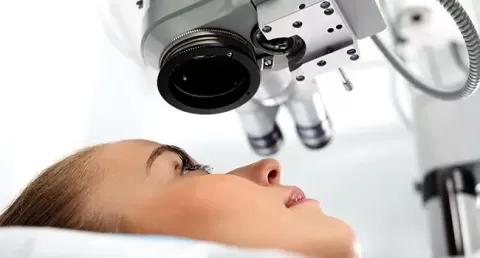
A Contoura enhancement after LASIK is quite similar to your original procedure. The main difference is that it is even more customized, guided by detailed maps of your corneal surface.- The same flap may be carefully lifted (if suitable), or in few cases a new flap is created depending on your earlier surgery.
- The laser then performs precise reshaping. It is guided by your unique topography.
- Recovery is generally fast. Most people notice clearer vision within a day to two. Only minor fluctuations settle over some weeks.
- Post-surgery care includes protective eye shields and medicated drops for healing as well as comfort.
Conclusion
Contoura Vision can be a powerful way to enhance vision after LASIK in carefully selected patients. By using advanced topographic guidance, it corrects prescription errors as well as subtle surface imperfections. This leads to clearer, sharper, and more comfortable vision.The key is a comprehensive eye evaluation to make sure your cornea is healthy and suitable for additional reshaping. Speaking with a specialist will give you the best understanding of whether Contoura is the right next step for your eyes.
Could not find what you are looking for?


