




See Clearly. Live Freely.

Experience next-gen SMILE laser eye surgery with minimal downtime and maximum comfort.

Family enjoying clear vision

Understanding SMILE Eye Surgery

Pioneered By Centre For Sight in 2008

Doctor performing cataract examination

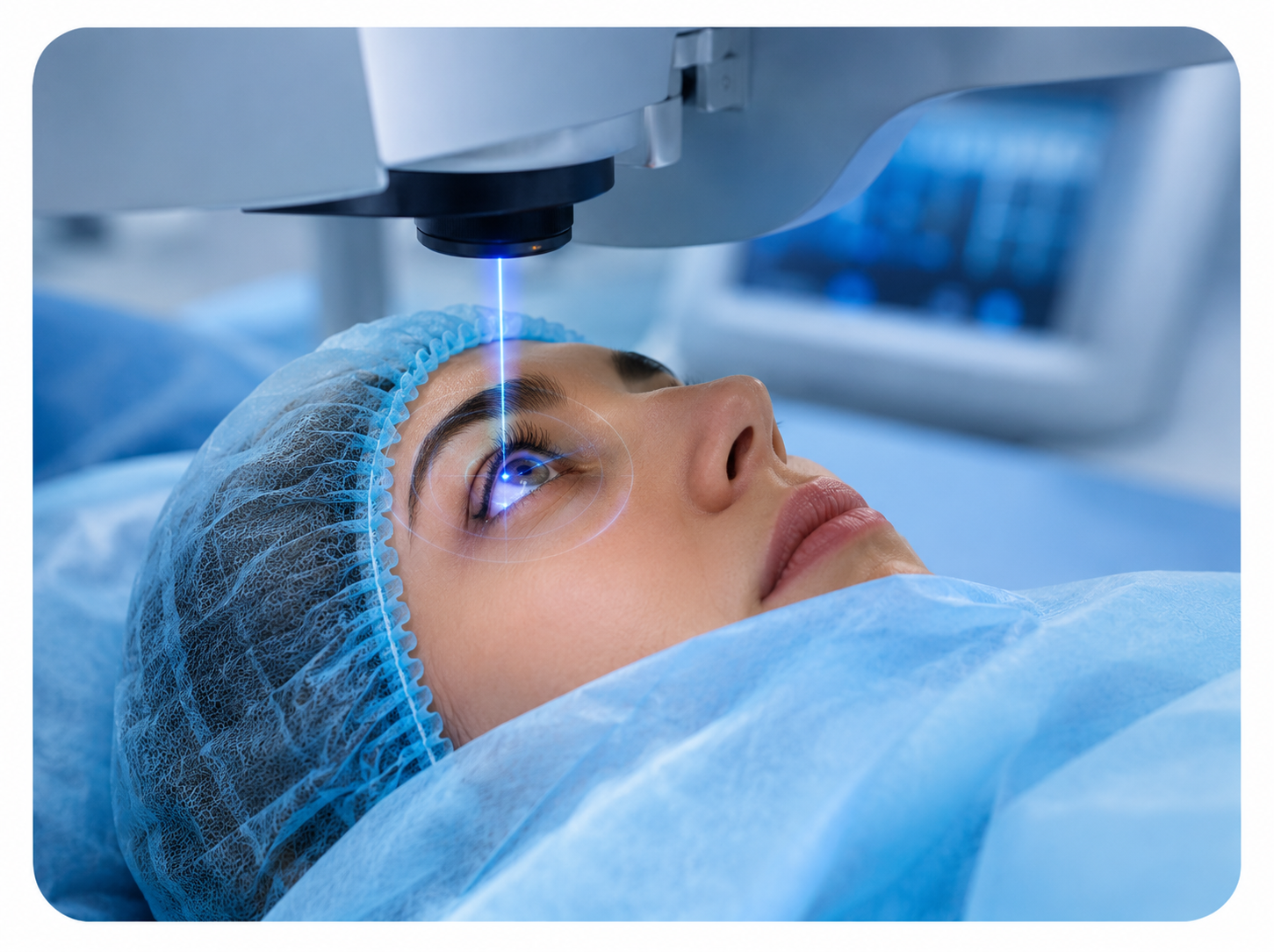
SMILE eye surgery (Small Incision Lenticule Extraction) is an advanced form of laser vision correction designed to correct refractive errors like myopia and astigmatism. Unlike traditional LASIK, the SMILE procedure is flap-free and involves creating a tiny lenticule (thin layer of corneal tissue) within the cornea using a femtosecond laser.

This lenticule is then gently removed through a small incision, reshaping the cornea and improving how light focuses on the retina. Because the outer corneal layer remains largely intact, SMILE surgery offers enhanced structural stability and reduced risk of dry eyes.

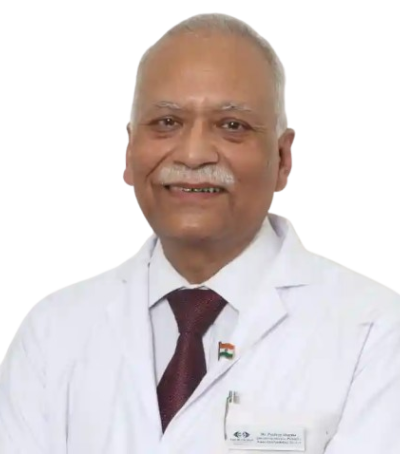
For those wondering what is SMILE surgery, it is a next-generation, minimally invasive vision correction, pioneered by Centre For Sight in 2008 by one of India's most renowned ophthalmologists, Dr Rupal Shah, who has also performed more than 1 lakh LASIK surgeries.

A minimally invasive procedure in which the laser reshapes the cornea for clearer, sharper vision.

SMILE Surgery: What Truly Matters

Age-related risk factors

The SMILE procedure is performed using a high-frequency femtosecond laser (typically 500 kHz), capable of creating micron-level accurate corneal tissue separation. Unlike excimer-based ablation, SMILE laser eye surgery forms a pre-calculated lenticule within the corneal stroma, which is then extracted through a micro-incision.

This closed, single-laser system reduces environmental variability and enhances reproducibility, making SMILE eye surgery highly precise for correcting myopia and astigmatism.

Quick Facts:

  • Laser accuracy: ~1–2 microns
  • INo excimer laser required
  • Entire correction completed within the cornea (stromal layer)

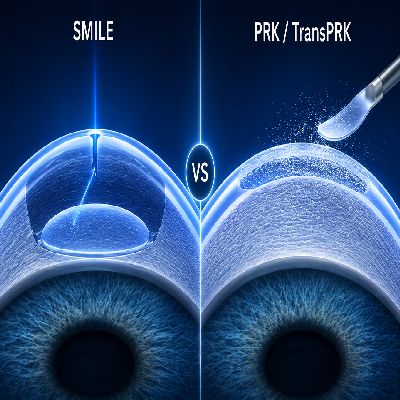
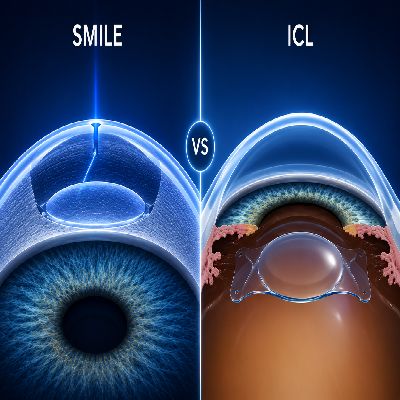
SMILE vs Other Vision Correction Procedures

Age-related risk factors

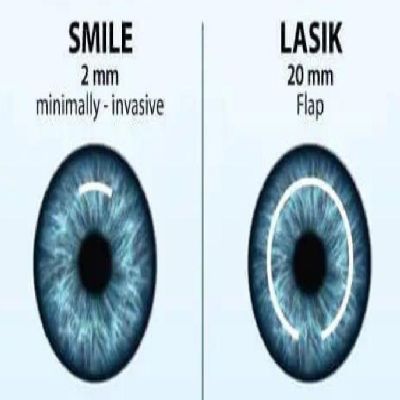
Both SMILE eye surgery and LASIK are laser-based procedures used to correct refractive errors, but they differ fundamentally in technique and tissue interaction.

SMILE is a flap-free, minimally invasive procedure where a lenticule is created and removed through a 2–4 mm incision. In contrast, LASIK involves creating a corneal flap, followed by excimer laser ablation.

1. Surgical Approach:

  • SMILE → Small incision (no flap)
  • LASIK → Flap creation + laser reshaping

2. Corneal Stability:

  • SMILE preserves anterior corneal lamellae → better biomechanical strength
  • LASIK slightly reduces the structural integrity due to the flap

3. Dry Eye Risk:

  • Lower in SMILE (less nerve disruption)
  • Higher in LASIK (due to flap cutting of corneal nerves)

4. Recovery:

  • LASIK → Faster initial clarity
  • SMILE → Slightly faster than LASIK and more stable

5. Suitability:

  • SMILE → Ideal for active lifestyles, dry eye-prone patients
  • LASIK → Suitable for broader refractive errors, including hyperopia

Your SMILE Surgery Journey: Step-by-Step


Evaluation & Diagnosis

A thorough pre-operative assessment is critical before proceeding with SMILE eye surgery. This stage determines candidacy, surgical planning, and risk profiling. Key Diagnostic Tests & Their Purpose:

Corneal Topography & Tomography: Maps the anterior and posterior corneal surface to detect irregularities (e.g., keratoconus) and assess corneal symmetry.

Pachymetry (Corneal Thickness): Measures central and peripheral corneal thickness to ensure sufficient stromal tissue for safe lenticule creation.

Refraction (Subjective & Cycloplegic): Determines accurate refractive error (myopia/astigmatism) and checks stability of prescription.

Wavefront Aberrometry: Evaluates higher-order aberrations affecting visual quality (e.g., glare, halos).

Tear Film Assessment (TBUT / Schirmer’s Test): Assesses ocular surface health and baseline dryness.

Slit Lamp & Fundus Examination: Evaluates anterior and posterior segment health to rule out pathology.

Clinical Outcome of This Step:

  • Confirms eligibility for SMILE laser eye surgery
  • Determines treatment parameters (lenticule size, depth, optical zone)
  • Identifies contraindications (e.g., keratoconus, unstable refraction)

Life After SMILE Surgery

 
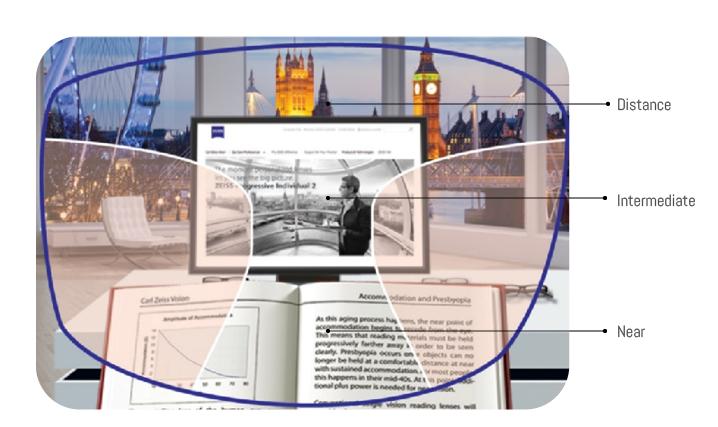
Vision types - near, intermediate and far vision illustration
Age-related risk factors

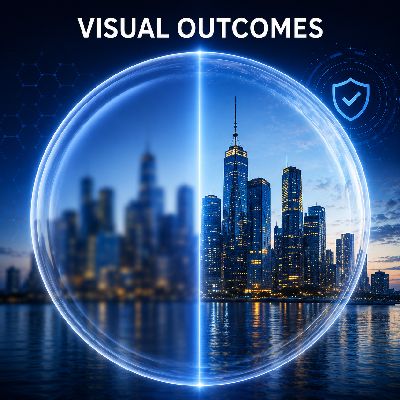
The primary objective of SMILE surgery is to correct myopia (nearsightedness), with or without astigmatism, by reshaping the cornea to improve how light focuses on the retina. This results in significantly sharper and clearer distance vision. Most patients experience noticeable improvement within 24–48 hours, with continued refinement over the following weeks as the cornea stabilises.

What to expect:

  • High-definition distance vision (driving, TV, outdoor clarity)
  • Significant reduction or elimination of glasses for distance
  • Stable refractive correction with predictable outcomes
  • Improved visual quality compared to pre-surgery correction

Cost of SMILE Eye Surgery in India

The cost of SMILE eye surgery can vary based on several factors, including the clinic’s location, the surgeon’s experience, and any additional services provided. At Centre for Sight, the cost of SMILE starts from ₹1,30,000 for both eyes with flexible EMI options available for patients. During your consultation, a detailed cost breakdown will be provided so that you are fully informed of the pricing structure.

  • Dry Eye Symptoms: Some patients may experience temporary dryness due to mild disruption of corneal nerves. This is usually less common and milder compared to flap-based procedures and improves with lubricating drops.
  • Visual Fluctuations: Mild blurring or fluctuations in vision may occur during the early healing phase as the cornea stabilises. Vision typically sharpens progressively over a few weeks.
  • Glare, Halos or Light Sensitivity: Some patients may notice halos or glare, especially at night, in the initial post-operative period. These symptoms usually reduce as neural adaptation occurs.
  • Undercorrection or Residual Refractive Error: In some cases, a small residual refractive error may remain, which may require enhancement or additional correction depending on clinical assessment.
  • Infection or Inflammation (Rare): Though uncommon, there is a minimal risk of infection or inflammation, which can be effectively managed with timely medication and follow-up care.

Why Choose Centre For Sight?

Seamless Patient Journey

From consultation to recovery, we ensure a smooth and comfortable experience at every step.

Expert Surgeons

Our team of highly skilled surgeons bring decades of combined experience in advanced eye care procedures.

Precision Tech

We leverage the latest diagnostics and surgical technologies, setting new standards in the field of eye care.

Proven Reputation

With 30+ years of trust, 15 Lac+ happy patients, and 90+ centres across India.

Order
20

Testimonials

Hear It From Our Happy Patients.

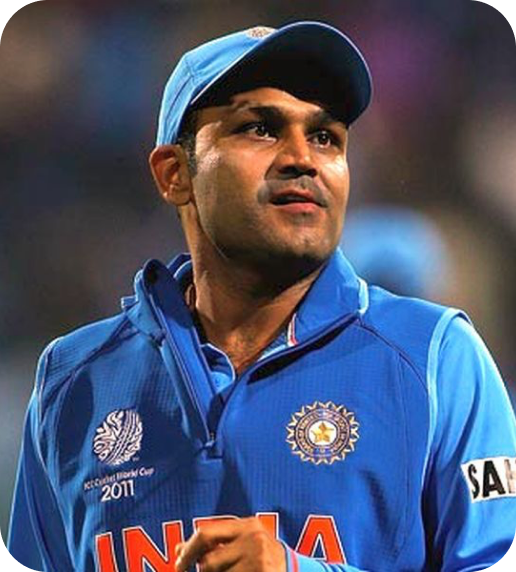
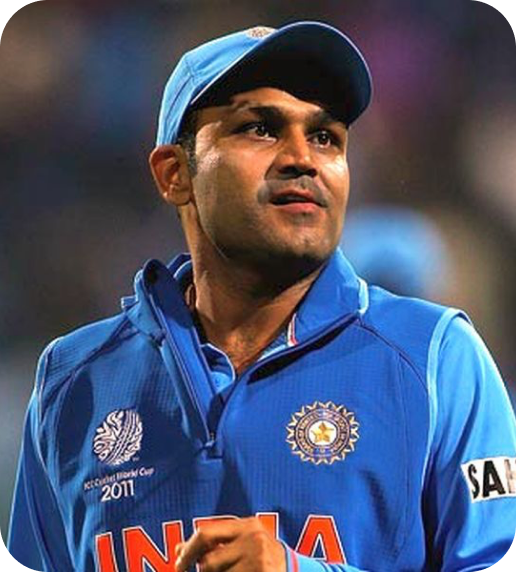
Virender Sehwag
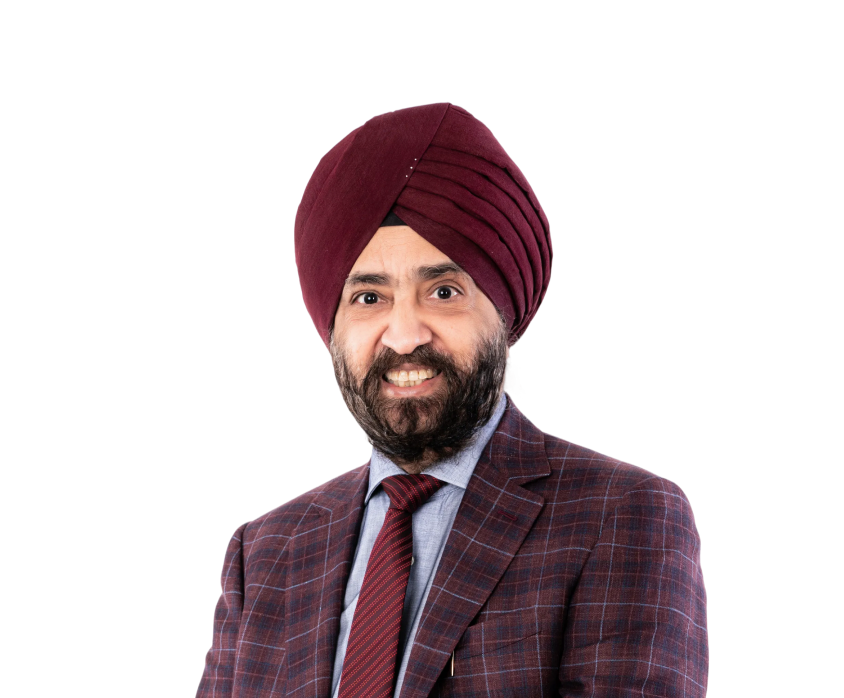
We’ve been consulting Centre for Sight for over a decade. His expertise brings peace of mind to both patients and families. The staff is courteous and patient, guiding smoothly and ensuring comfort. Every visit is a pleasant, relieving experience.Dr. Mahipal Sachdev, take a bow to your leadership and vision!
Abhaya Gupta Founder & Chief Visionary Officer, Nanya Inc.

Chose CFS For Eye Care

Virender Sehwag
My Mother Recently Underwent Cataract Surgery With Prof. Dr. Mahipal S. Sachdev, And We Are Extremely Satisfied With The Care And Outcome. Heartfelt Thanks To Dr. Sachdev And The Entire Centre For Sight Team For Their Professionalism, Expertise, And Warm Support Throughout The Process.
Virender Sehwag Former Indian Cricketer

Chose CFS For Cataract Surgery

Virender Sehwag
Seven Years Back, I Used To Wear Eyeglasses And Contact Lenses, But Then I Got SMILE Eye Surgery Done At Centre For Sight. It Has Been A Life-Changing Experience For Me. I Highly Recommend Centre For Sight.
Bipasha Basu Actress

Chose CFS For SMILE Eye Surgery

Virender Sehwag
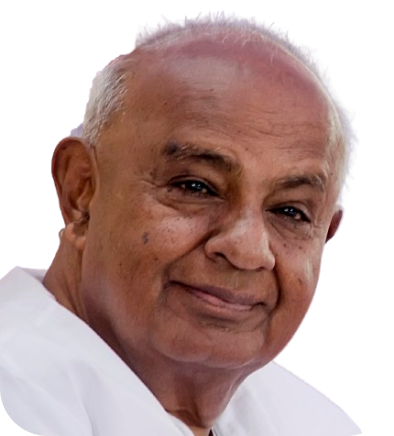
Highly appreciable of highest quality of care centre.Dr. Mahipal is an ophthalmologist of great excellence both in his caliber of work and his extremely courteous behavior. I wish him success of highest possible heights.
Shri H.D. Deve Gowda Former Prime Minister of India

Chose CFS For Eye Care

All Centres

Find The Nearest Eye Care Centre For Clearer Vision.

View All Our Centres

Frequently Asked Questions

Could not find what you are looking for?

Request a Callback

+91